Master the art of detecting deception, explore the science and psychology of deception, and learn how to accurately read clients in this course. APA-Approved

Earn 5.50 CE Credits!
Research shows we encounter nearly 200 lies a day, making deception detection a crucial skill, especially for psychologists who rely on accurate information to treat clients effectively. Lies, whether big or small, can distort a psychologist's understanding of a client's behavior, potentially hindering therapy. While most people are only about 54% accurate at detecting deception, training can boost this accuracy to 90%.
This specialized course equips participants with advanced skills to detect deception, including analyzing body language, facial expressions, and narrative statements for signs of dishonesty. It covers the science and psychology of deception, debunks myths, and teaches scientifically validated cues of deceit.
The techniques taught are valuable in many contexts and especially useful for psychology professionals.
Note: Pamela offers an 11-module masterclass named Deception Detection: Interviewing and Getting to the Truth. This course, Deception Detection, teaches the same material as the first half of the masterclass. The second half of the masterclass is also offered separately as Interviewing and Getting to the Truth.
THE CLASS: The first course in a two-part series on Deception Detection, Interviewing and Getting to the Truth, is video driven with 23 engaging videos.
THE FORMAT: Self-paced, pre-recorded.
Once you sign up, you will have access to:
I can’t wait to see you in class! It’s lots of fun, and our community is growing fast.
Pamela Meyer
This course has no known conflict of interest or commercial support.
APA Sponsor Statement
Calibrate Inc. is approved by the American Psychological Association to sponsor continuing education for psychologists. Calibrate Inc. maintains responsibility for this program and its content.
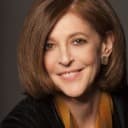
Pamela Meyer (Harvard MBA, Certified Fraud Examiner) is the world’s leading expert of detecting deception. Pamela’s TED talk, “How to Spot a Liar,” is a worldwide sensation. With over 30 million views and translated into more than 40 languages, it is the 13th most-watched TED talk of all time. The talk is based on her bestselling book, Liespotting: Proven Techniques to Detect Deception. Pamela brings years of knowledge – previously found only in the intelligence community, police training academies, and universities – to the effort to uncover the truth and build trust. She synthesizes her C-Suite business savvy with the critical deception detection skills she’s accumulated: advanced interviewing and interrogation techniques; facial micro-expression reading; body language interpretation; statement analysis; facial microexpression analysis, and behavior elicitation techniques. These techniques were developed by our national espionage, intelligence, security, and law enforcement agencies over the last 75 years. They were refined by the top psychologists and psychiatrists at leading American research universities and think tanks. The result is a specialized body of information developed specifically to help accountants, business executives, managers, investment professionals, social workers, human resources specialists, lawyers, insurance professionals, corporate officers, and others detect deception and get the information they need to successfully conduct their most important interactions/transactions and build trust. Pamela’s work and her method for detecting deception have been featured in Business Week, The Atlantic, Harvard Business Review, The Wall Street Journal, CNN, The New York Post, The Washington Post, Forbes, The Huffington Post, ABC News, Portfolio, Fox Radio, Cosmopolitan, and numerous syndicated radio and television programs. Pamela is the founder and CEO of Calibrate, in Washington, D.C. which trains businesses on fraud detection, deception detection, inside threat mitigation, and security awareness. Pamela holds an MBA from Harvard, a master’s degree in Public Policy from Claremont Graduate School, and is a Certified Fraud Examiner.
